


Making Out-Of-Band Management (OOBM) a reliable accompaniment to network outages
- Sep 30, 2017
- 2 min read
In the world of IT infrastructure, network outages are fact of life. Some are planned and some are unplanned. At one point in time, IT equipments gone offline and there is a way to bring them back online. This is an ideal situation where an OOBM acts as a reliable accompaniment to network outages. In the event of an unplanned downtime of a production network and remote or branch office network, OOBM often plays a significant role in accessing and controlling the unavailable network to ensure continuity of business, also reducing the response time of outage.
OOBM is one of those topics that is not talked about nearly enough but is an incredibly important in the IT world. Apart from accessing and controlling of IT assets outside of the production network, OOBM saves a whole lot on IT costs and improves IT efficiency and effectiveness – especially for businesses with multiple locations. It allows system administrators to perform remote troubleshooting, configuring, and rebooting of firewalls, routers, bridges, switches and servers. OOBM provides administrators with the ability to monitor servers and network devices remotely regardless if the device is powered on, powered off, non-responsive or when not accessible by the standard network channel. Unlike, in-band management, OOBM might be functional if the operating system is not present or is not operational.
We are living in a modern business world; where right from business owners to employees, as well as customers expect 100% connectivity and uptime. A modern business cannot operate up and running while its network is down. For an instance, a network outage for distributed enterprises with branch offices, could cause a huge loss of revenue, damage to brand and customer satisfaction, increase risks associated with security and fraud, a halt to business operations, and inaccessibility to network and data. Gone were the times when technicians would run off to whatever offices in order to fix any problems that were going on with the computer networking systems and turned out to be a super expensive affair.
Though network failover is a part of business’ reality, yet OOBM can play a vital role to reduce the impact of these unexpected events. A smart OOBM solution will definitely help you in detecting break network, keeping your business and revenue rolling, while mitigating risks to your security and customer success.
Take a case, when a router’s internet/WAN connection fails and system admins unable to resolve it while entering commands over a high latency dial-up connection. With that Dumb OOBM, there’s no way out to automate intelligence actively preventing issues from occurring. In contrast, an alternative approach would be using a smart OOBM with a high-speed cellular connection capability, ideally 4G LTE to correct the prevailing issues and bring back the failed connection online.
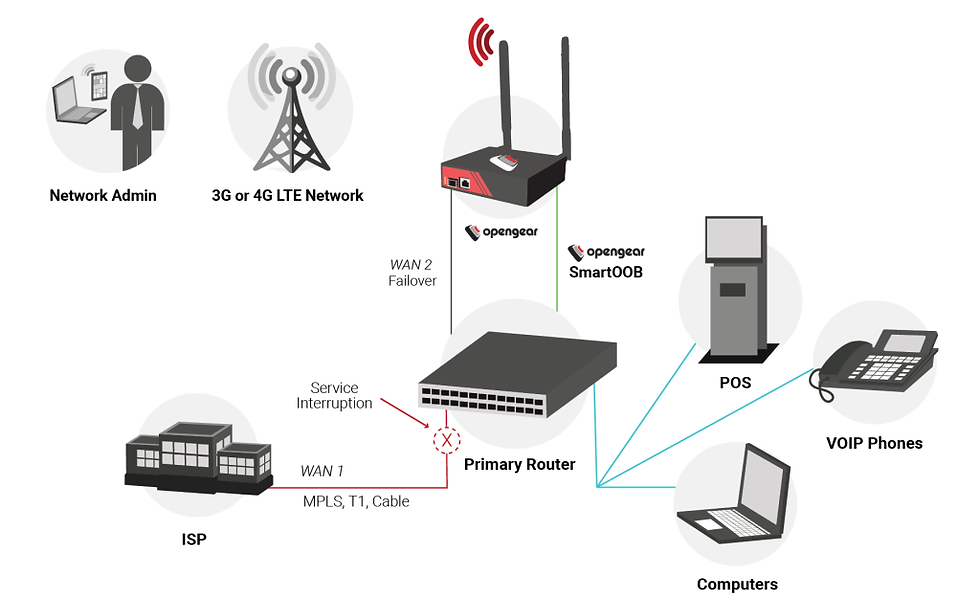
In the competitive business world everyone is looking for a simple, preventative, cost-effective and secure way to delivering resilience, remote troubleshooting and remediation to improve connectivity, and the efficiency of networks.
Persistent Systems has released a new whitepaper that discusses latest changes and updated options for OOBM, various OOBM use cases, and deployment of OOBM networks in production data centers and remote or branch office environments. To learn more about OOBM and the latest next-generation IT infrastructure solutions, download our latest whitepaper here.
Comments